
Aesthetics
At Prosper Comprehensive Care, our approach to aesthetic medicine is focused on helping patients look refreshed, natural, and confident while preserving the features that make them unique. Modern aesthetic treatments can address different aspects of facial aging, including dynamic wrinkles, loss of facial volume, changes in skin quality, and decreased collagen support. Depending on an individual’s goals and medical evaluation, treatment options may include neuromodulators such as Botox®, dermal fillers, Sculptra®, and platelet-rich plasma (PRP). Because each treatment works differently, therapies may be used individually or incorporated into a personalized aesthetic plan designed to achieve subtle, balanced, and natural-looking results.

Treatment outline:
*At Prosper Comprehensive Care, we offer Juvéderm dermal fillers, with additional brands potentially available in the future. Treatment recommendations are individualized based on your aesthetic goals and clinical evaluation.
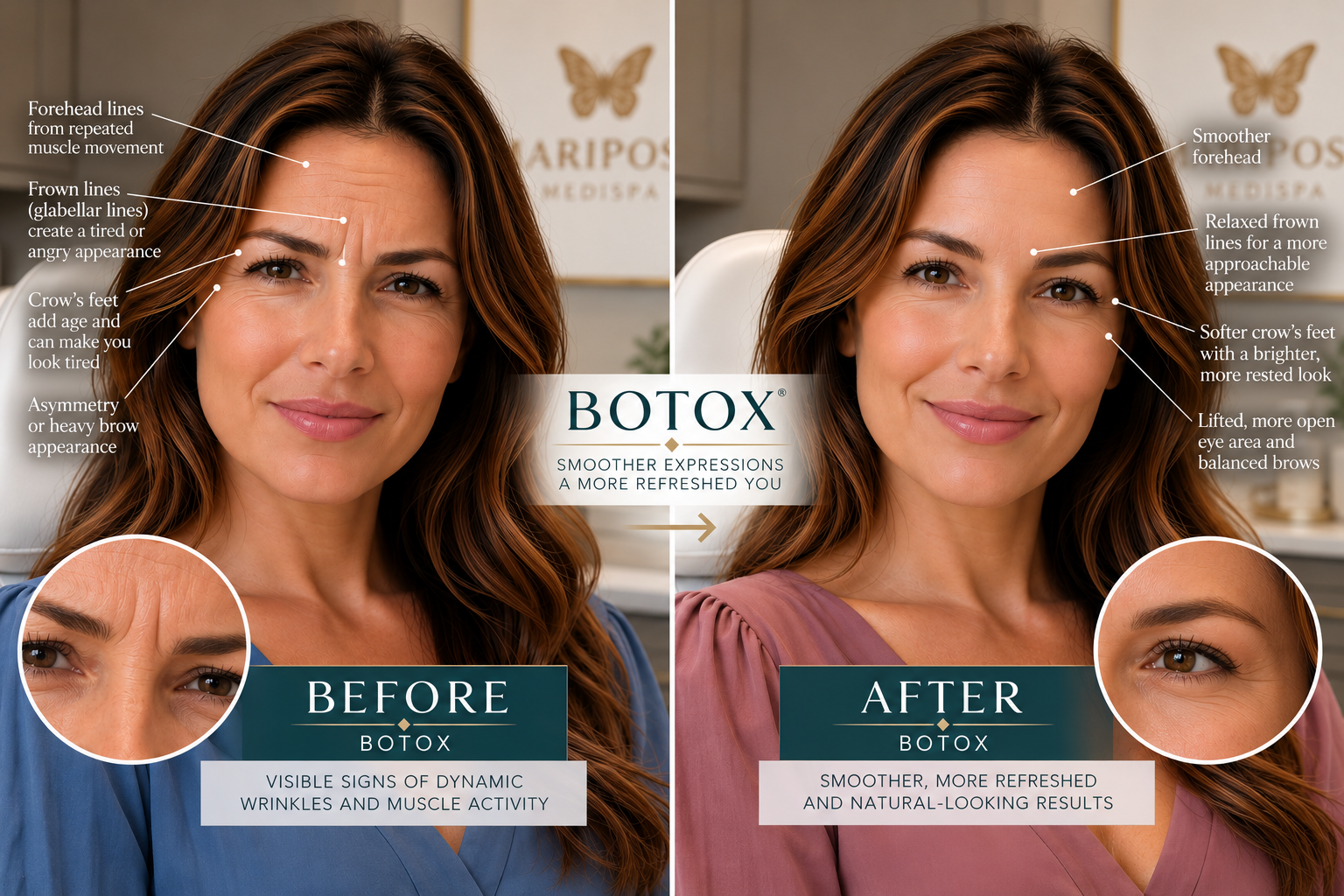
BOTOX® & Neuromodulators
BOTOX® Cosmetic (onabotulinumtoxinA) is a neuromodulator used to temporarily reduce the muscle activity responsible for many of the expression lines that develop over time from smiling, frowning, squinting, and raising the eyebrows. At the molecular level, BOTOX® works at the neuromuscular junction by entering targeted nerve endings and cleaving a protein called SNAP-25, which is necessary for the release of the neurotransmitter acetylcholine. By temporarily reducing acetylcholine release, the signal between the nerve and the targeted muscle is decreased, allowing the muscle to relax and the overlying skin to appear smoother.
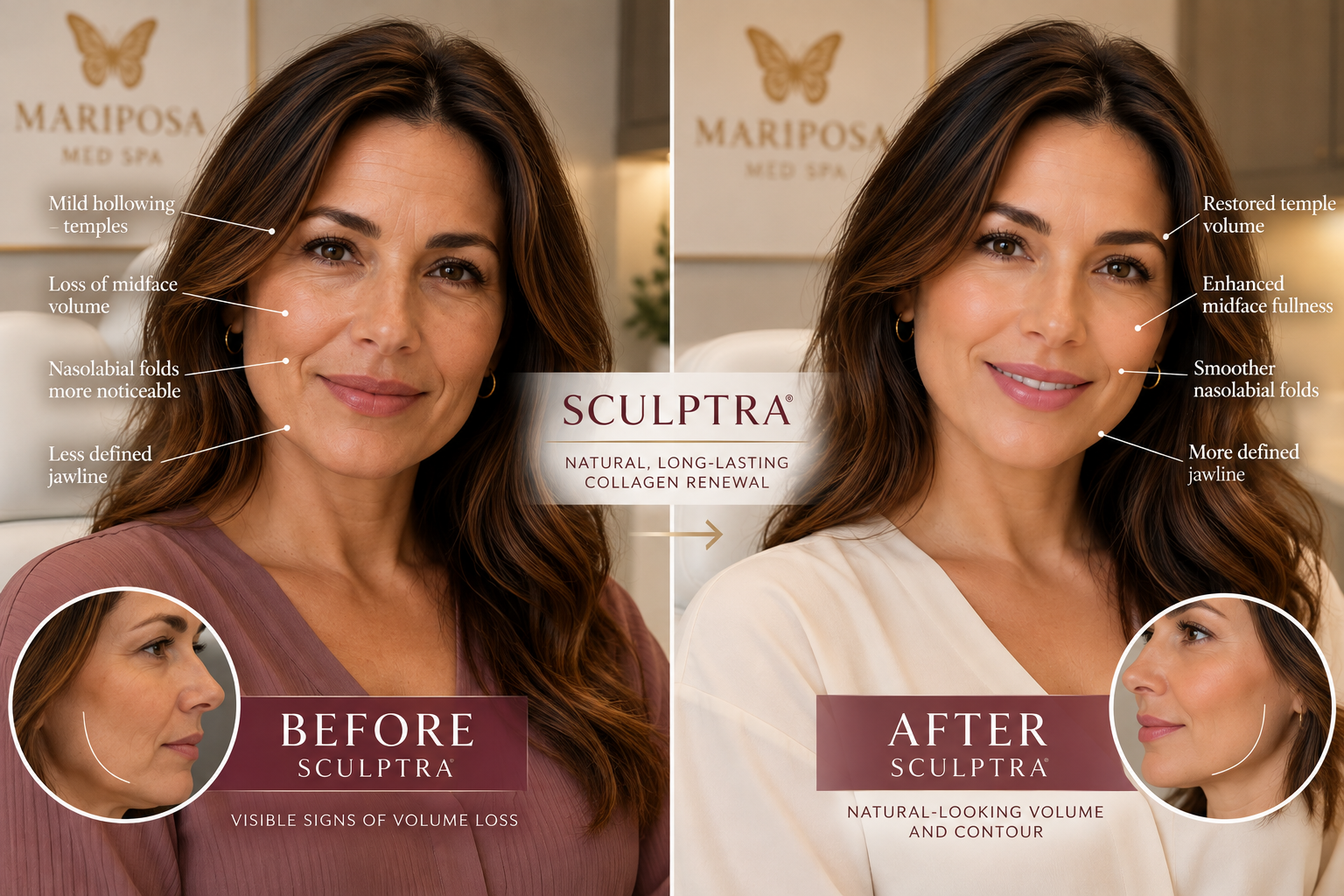
Sculptra®
Sculptra® is an injectable collagen biostimulator designed to address some of the underlying structural changes associated with facial aging and collagen loss. Its active component is poly-L-lactic acid (PLLA), a biocompatible, biodegradable synthetic material. Unlike traditional hyaluronic acid dermal fillers that primarily provide volume by placing a gel beneath the skin, Sculptra works gradually by stimulating the body to produce more of its own collagen.
At the microscopic level, Sculptra’s PLLA microparticles are placed within the deeper tissues of the face, where they create a controlled tissue response that recruits and activates fibroblasts—the cells responsible for producing collagen. Over time, new collagen is deposited around the treatment area, helping strengthen the skin’s underlying structural framework. The PLLA particles themselves are gradually broken down and absorbed, while the newly produced collagen contributes to the longer-term improvement in skin structure, firmness, and appearance.
Because Sculptra relies on the body’s own collagen-building process, results develop gradually rather than immediately. Improvements may begin to become noticeable within approximately one month and can continue to develop over the following months. Sculptra may be used to improve facial wrinkles and folds, restore the appearance of facial structure and volume that has diminished with aging, and improve skin firmness and overall quality. FDA-approved aesthetic use includes correction of fine lines and wrinkles in the cheek region; additional aesthetic applications may be considered off-label depending upon the patient’s anatomy and treatment goals.
Treatment is individualized, but many patients receive approximately 2–3 treatment sessions over several months, commonly with treatments separated by at least 3–4 weeks. The amount of Sculptra and number of sessions needed depend upon facial anatomy, degree of collagen and volume loss, age, and desired correction. Results can last up to approximately two years in clinical studies, although individual results vary. Because collagen continues to change naturally with aging, future maintenance treatment may be recommended based on the individual’s response and aesthetic goals.
Sculptra differs from traditional dermal fillers in an important way. Hyaluronic acid fillers such as Juvéderm® and Restylane® physically add gel beneath the skin and can provide visible volume and contour soon after injection. Sculptra takes a more gradual approach by stimulating the patient’s own collagen production to help rebuild the skin’s underlying support structure. For this reason, Sculptra can be an excellent option for patients seeking progressive, subtle, and natural-looking rejuvenation rather than an immediate change in appearance.
At Prosper Comprehensive Care, Sculptra treatment is customized to each patient’s facial anatomy, degree of volume and collagen loss, and aesthetic goals. Our philosophy is to restore balance and support while maintaining the natural characteristics that make each patient’s face unique.
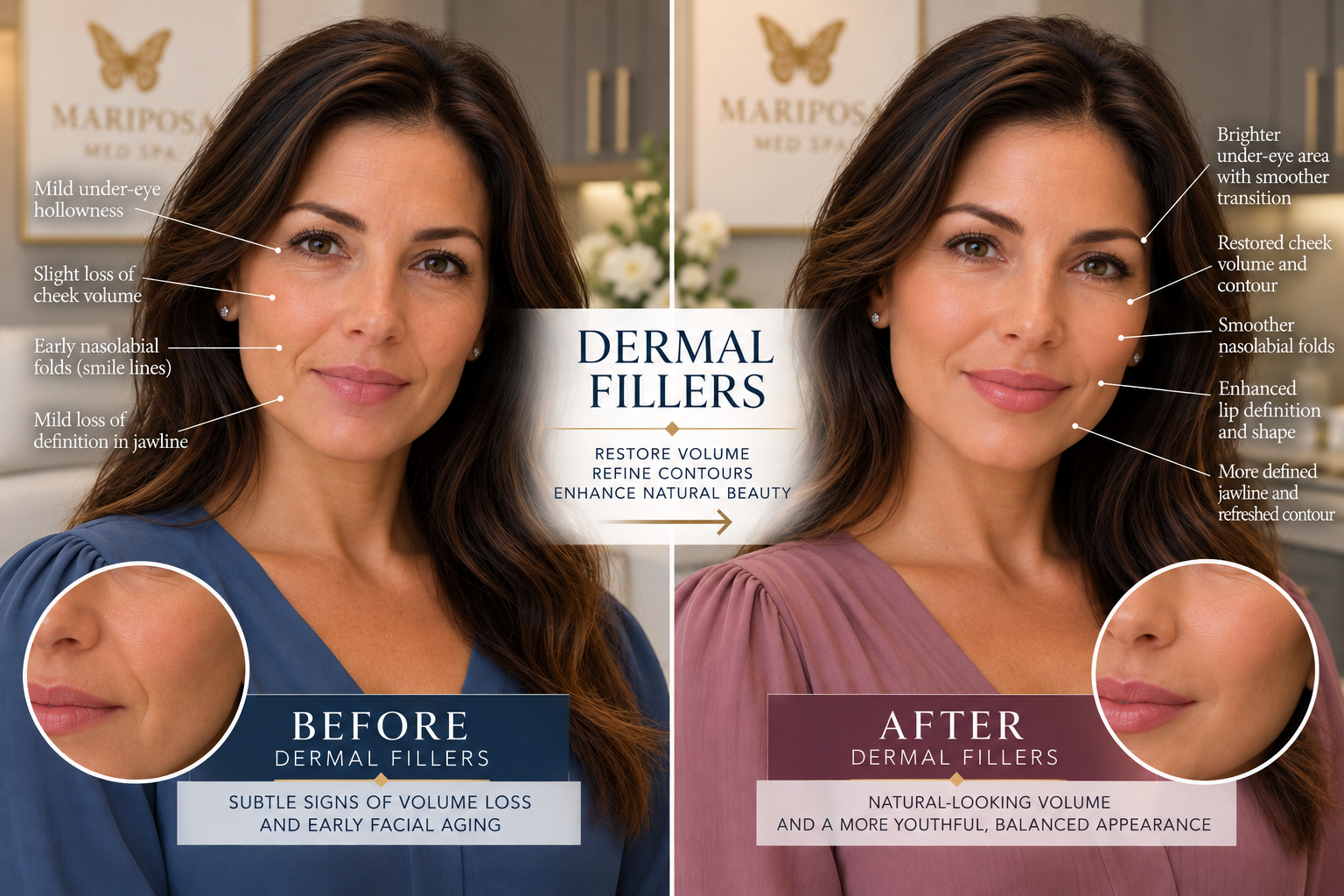
Dermal Fillers
Dermal fillers are injectable treatments designed to restore or enhance facial volume, soften certain lines and folds, improve facial contours, and create greater balance among facial features. As we age, the face undergoes gradual changes involving the skin, fat compartments, connective tissues, and underlying structural support. This can contribute to flattening of the cheeks, deepening of facial folds, thinning of the lips, changes around the mouth, and loss of definition along areas such as the chin and jawline. Dermal fillers can be strategically placed to replace or enhance volume in selected areas, allowing treatment to be customized to the patient’s individual facial anatomy and aesthetic goals.
Many of today’s most commonly used dermal fillers are composed of hyaluronic acid (HA), a naturally occurring polysaccharide found within the body’s extracellular matrix. Hyaluronic acid has a strong ability to bind water. In injectable fillers, HA molecules are formulated into a gel and chemically cross-linked to varying degrees, which helps the material resist degradation and remain within the tissues longer. Once injected, the HA gel provides physical volume and structural support while attracting and retaining water within the treated area. Different filler formulations have different concentrations, degrees of cross-linking, particle characteristics, and rheologic properties, allowing a provider to select a product based upon the depth of injection, degree of support required, movement of the treatment area, and desired aesthetic effect.
Dermal fillers may be appropriate for adult women and men who have experienced age-related facial volume loss or who would like to enhance the proportion, contour, or definition of certain facial features. Depending upon the specific FDA-approved product and indication, fillers may be used to improve areas such as the cheeks, lips, chin, jawline, under-eye hollows, nasolabial folds, lines around the mouth, and other selected areas. Not every filler is appropriate or FDA-approved for every location, which is why treatment begins with an individualized assessment of facial anatomy, skin quality, medical history, and aesthetic goals.
One of the advantages of traditional dermal fillers is that improvement in volume and contour can generally be appreciated immediately after treatment, although temporary swelling and bruising can initially affect the final appearance. Results are not permanent. The longevity of a filler depends upon the specific product, its molecular and physical characteristics, the amount used, treatment location, and the individual patient’s metabolism. FDA information describes many hyaluronic acid fillers as lasting approximately 6–12 months, while certain FDA-approved HA products and indications have demonstrated effects lasting considerably longer—up to approximately 24 months in some cases. Therefore, rather than requiring treatment on a fixed schedule, patients are reevaluated as the filler gradually diminishes. Some patients may choose maintenance or touch-up treatment around 6–12 months, while other products and treatment areas may maintain satisfactory correction for a year or considerably longer.
Dermal fillers are different from both BOTOX® and Sculptra®. BOTOX® is a neuromodulator that temporarily reduces targeted muscle activity and is particularly useful for expression-related wrinkles. Sculptra® works primarily as a collagen biostimulator, producing a gradual improvement as the body develops additional collagen. Traditional hyaluronic acid fillers instead provide direct volume, contour, and structural support at the time of injection. Because these treatments address different components of facial aging, the most appropriate treatment—or combination of treatments—depends upon what is actually producing the patient’s concerns.
At Prosper Comprehensive Care, our philosophy is that successful filler treatment should not simply make the face look “fuller.” Our goal is to evaluate the face as a whole and use conservative, strategically placed treatment to restore proportion, enhance natural contours, and create a refreshed and balanced appearance without making the patient look overfilled or unnatural. Each treatment plan is individualized, and the amount and type of filler are selected according to the patient’s anatomy, degree of volume loss, desired correction, and overall aesthetic goals.
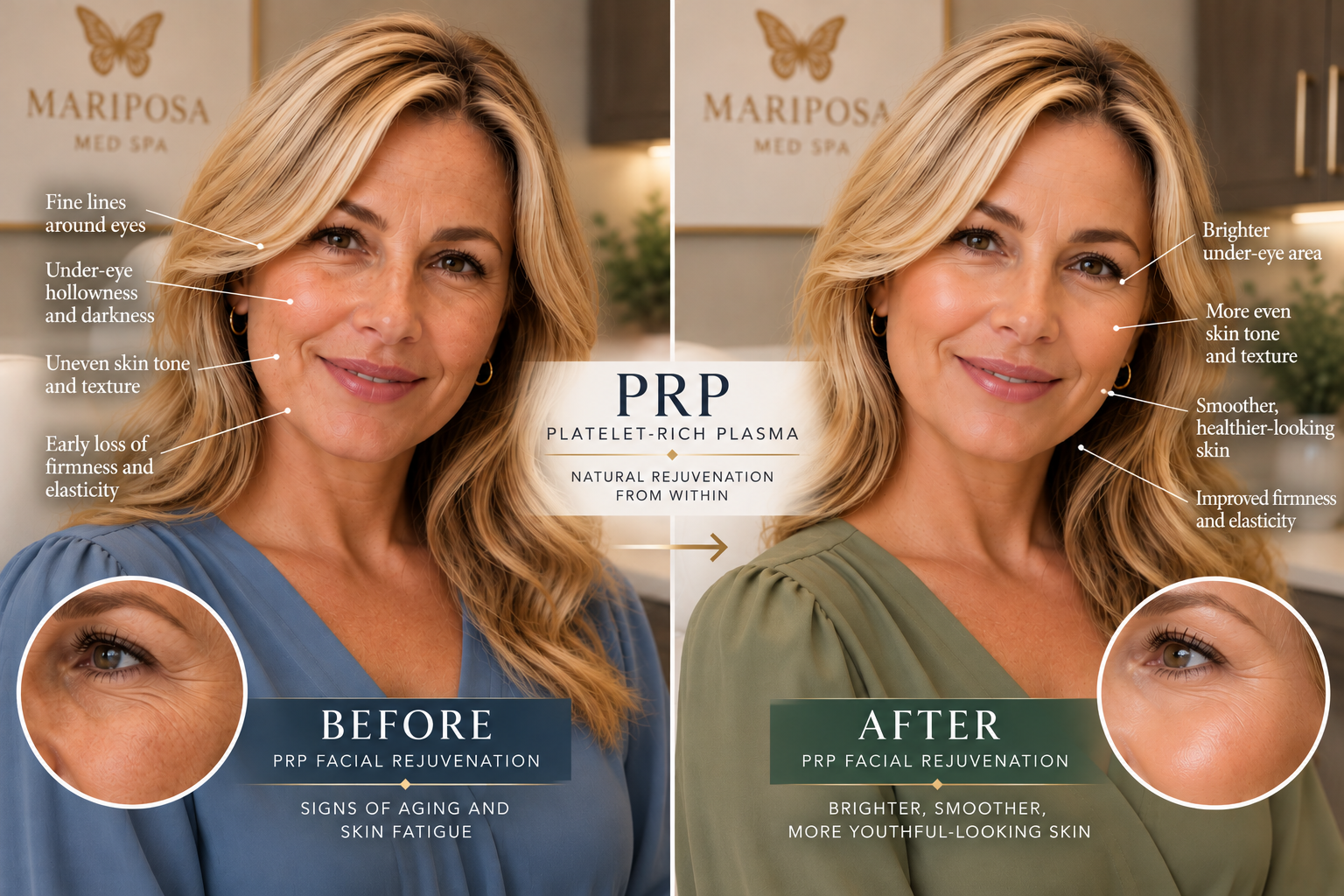
Platelet-Rich Plasma (PRP)
Using your body’s own healing signals
Platelet-Rich Plasma, or PRP, is a regenerative treatment prepared from a small sample of the patient’s own blood. The blood is processed to separate and concentrate platelets within the plasma, creating a preparation containing a higher concentration of platelets than is normally present in circulating blood. Because PRP is autologous—derived from the patient’s own blood—it uses the patient’s own platelets and naturally occurring signaling proteins rather than introducing a synthetic filler or foreign volumizing material.
At the molecular level, platelets are much more than cells involved in blood clotting. They contain microscopic storage structures called alpha granules, which contain numerous growth factors and signaling proteins. When platelets become activated, they release mediators including platelet-derived growth factor (PDGF), transforming growth factor-beta (TGF-β), vascular endothelial growth factor (VEGF), epidermal growth factor (EGF), fibroblast growth factor (FGF), and other cytokines and signaling molecules. These molecules interact with receptors on fibroblasts, endothelial cells, and other cells involved in tissue repair. The resulting cellular signaling can promote fibroblast activity, collagen and extracellular-matrix production, cellular migration and proliferation, and the formation and remodeling of small blood vessels. Rather than simply filling an area, PRP is intended to stimulate biological processes associated with the body’s natural healing and tissue-remodeling response.
In aesthetic medicine, PRP may be considered for appropriately selected adult women and men who are interested in improving skin quality, texture, and the appearance of aging or damaged skin, depending upon the treatment area and individual goals. PRP is also used in several other areas of medicine and continues to be actively studied. Because the composition of PRP varies according to the patient’s blood, preparation technique, platelet concentration, and other factors, individual responses can vary and PRP should not be viewed as producing the same predictable volumizing effect as a traditional dermal filler.
How PRP is prepared matters. At Prosper Comprehensive Care, we believe that regenerative procedures should be performed using careful medical technique and appropriate equipment. We use a purpose-designed PRP collection and processing system rather than attempting to prepare injectable PRP from routine diagnostic blood-collection tubes alone. Dedicated PRP systems are specifically designed to separate and concentrate components of a patient’s blood and typically incorporate defined collection, processing, anticoagulation, and transfer components. This approach provides a more standardized and controlled method of preparing PRP and helps minimize unnecessary handling of the blood product before it is returned to the patient. Routine laboratory collection tubes, including blue-top citrate tubes, are primarily designed for collection of blood specimens for diagnostic testing and are not interchangeable with a complete PRP preparation system.
PRP treatment is individualized based on the patient’s age, skin quality, degree of sun damage or aging, treatment area, and aesthetic goals. For facial and skin rejuvenation, many patients begin with a series of approximately three treatments, commonly spaced about 3–4 weeks apart, allowing time for the biological healing response and collagen-remodeling process to develop between sessions. Some patients may require fewer or additional treatments depending on their individual response. Because PRP works by stimulating the body’s own regenerative and tissue-remodeling processes, improvement typically develops gradually over the weeks and months following treatment rather than occurring immediately.
After completing an initial series, additional maintenance treatments may be considered periodically, often approximately every 6–12 months, depending on the patient’s response, ongoing aging, skin condition, and aesthetic goals. There is no single treatment schedule appropriate for every patient, and the optimal frequency of PRP for aesthetic rejuvenation has not been definitively established. Each PRP treatment plan is therefore customized following an individual medical and aesthetic evaluation.
Our goal is to use PRP as part of an individualized, medically supervised aesthetic plan when it is appropriate for the patient’s needs. PRP may be used alone or considered alongside other aesthetic treatments, with the choice of therapy based upon facial anatomy, skin quality, medical history, and the patient’s desired outcome.